The Blanchminster Story
Of course, the story of Binhamy starts with the Blanchminsters when they built their home here around 1220. But their impact on the area extended well beyond the 150 years of their ownership, in the form of the Blanchminster Trust, set up in their name- even if they were not the sole benefactors of the Trust.
In can also be said that the land at Binhamy is one of the most important settlement locations going back into prehistory, as we saw on the pre-history pages. This is why the present Binhamy Trust has been set up to protect the heritage here for posterity and it is why this website has been created to draw public attention to the value of this site and why it must be protected.
So, the story of Binhamy as such starts with the Blanchminsters but, like all aristocratic family heritage, it presents a confusion of names and mix of spellings of the names; plus, marriage within all the leading families of the time. The Blanchminsters do not disappoint in this respect. There are so many different spellings of the name and many of the family males are called Ralph, Ranulph or Reginald and just to complicate the story further Reginald is sometimes named Ralph!
The Blanchminster story starts with two families, the Blanchinsters and the Torets.
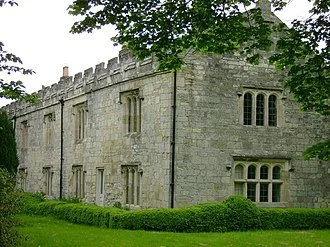
The family of Lucy Toret (known in local records as Turet) has a heritage going back to Saxon times. Her grandfather was Bertram Haget 11, a wealthy Yorkshire magnate and benefactor. He had two sons, and four known daughters, one of whom was a Lucia Haget, born 1145 AD at Healaugh, Wetherby, Yorkshire. Bertram Haget is understood to have built the Priory at Healaugh (shown) and it would appear one of his daughters became one of the incumbents.
Lucia married Peter Fitz Toret (c 1165) of Morton Toret (later called Moreton Corbet.). The Toret family were Saxon Lords who had managed to keep their estates at the time of the Norman Conquest, and they inherited the Saxon fortified earthwork at, the then, Moreton Toret, where they built a fortified home with a wood palisade.
Lucia and Peter Fitz Toret had a son Bartholomew (born c1165 - died 1235.) and a daughter Lucy, (born 1177 AD.)
Bartholomew, in 1216 rebelled against King John in the First Bishops War, following the forced signing of Magna Carta. Bartholomew was eventually captured and imprisoned, but King John died during 1216 and his son, King Henry 111 came to the throne. A year later, with the new King on the throne, Bartholomew abandoned the cause of the rebels and gave his allegiance to the new King; he was duly released from prison.
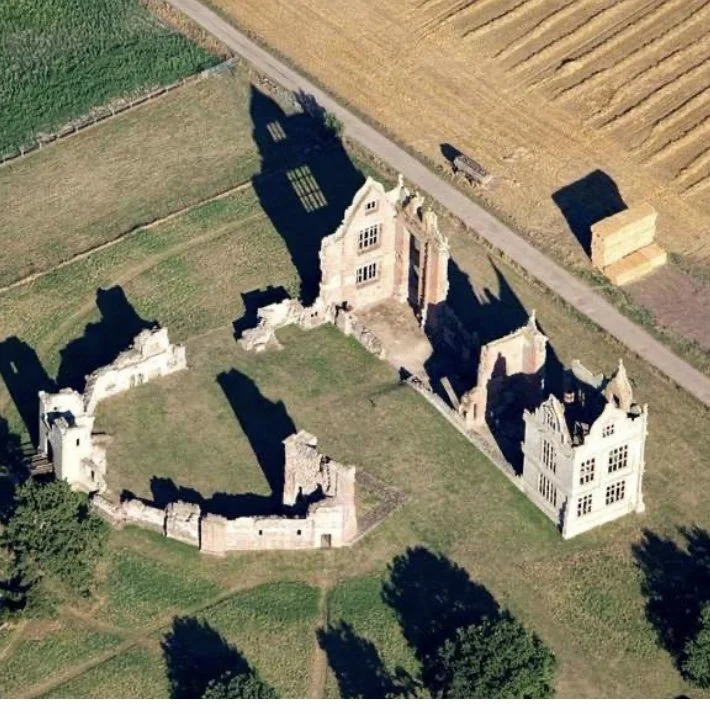
Shown are the present day remains of the Moreton Toret Castle. Here it is a stone structure; at Lucy’s time it will have been a wooden palisade enclosure.
(The name of Toret became corrupted over time to Turet and this is the name Blanchiminster Trust used in their accounts)
Daughter Lucy Turet married William Fitz Ralph de Blanchminster in 1198 at Whitchurch, Shropshire; Lucy was aged 21 and Ralph de Blanchminster was around 43 years. The couple moves to Stratton or possibly Week St Mary and certainly eventually, at the manor of Binhamy, which they will develop and encircle with a moat and palisade.
The Blanchminster family issue from Whitchurch, which was just to the north of Moreton Toret, so this would surely account for the couple coming together. The Latin name for Whitchurch was Album Monesterium and from this we see how Ralph Blanchminster often titled himself, “Ranulph de Albo Monesterio”.
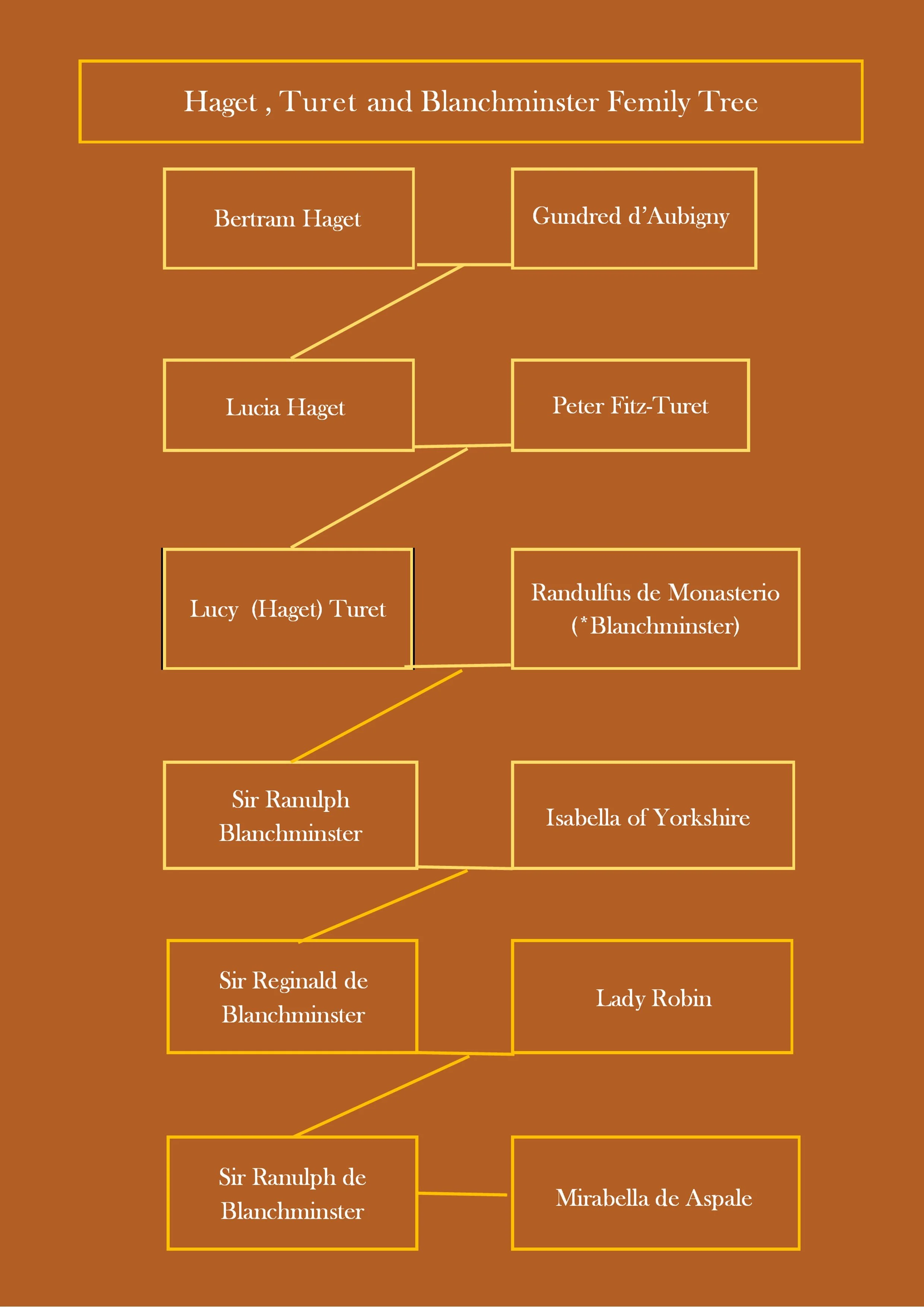
The couple had three boys: Roger (b) 1200, William (b) 1205 and Ralph or Ranulph (b) 1210. The family tree as presently understood is shown.
Lucy’s son, as Sir Ranulph, eventually marries Isabella de Wyke, in the second half of the 13th century. Isabella’s family came from Week (Wyke) St Mary and this estate now came into the possessions of Sir Ranulph. Either at that time, or a little later, Isabella inherits the estate on the Isles of Sicily, and this too becomes Blanchminster property.
It would seem that Sir Ranulph and Isabella, now improved the defences on the island which may have included defences around Ennor Castle. The northern parts of the island were administered by Tavistock Abbey, but the Old Town was controlled by a more secular administration. There was a history of piratical attacks on the island, so defences of some kind would be welcome. The first mention of a castle at Ennor on south main island was in 1244.
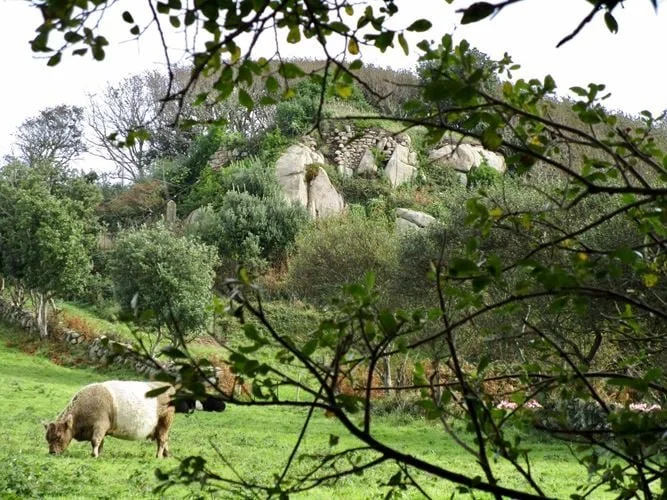
The photo shows vestiges of the brickwork of the castle at Ennor, Isles of Scilly.
Sir Ranulph and Lady Isabella had a son Reginald, born at Stratton in the year 1245 and he will become Sir Reginald de Blanchminster the Crusading Knight, who eventually married Lady Robin, around 1260. Sir Reginald and Lady Robin had their first son around 1262 to 1265, and he becomes the second Sir Ranulph de Blanchminster; a second son also named Reginald died.
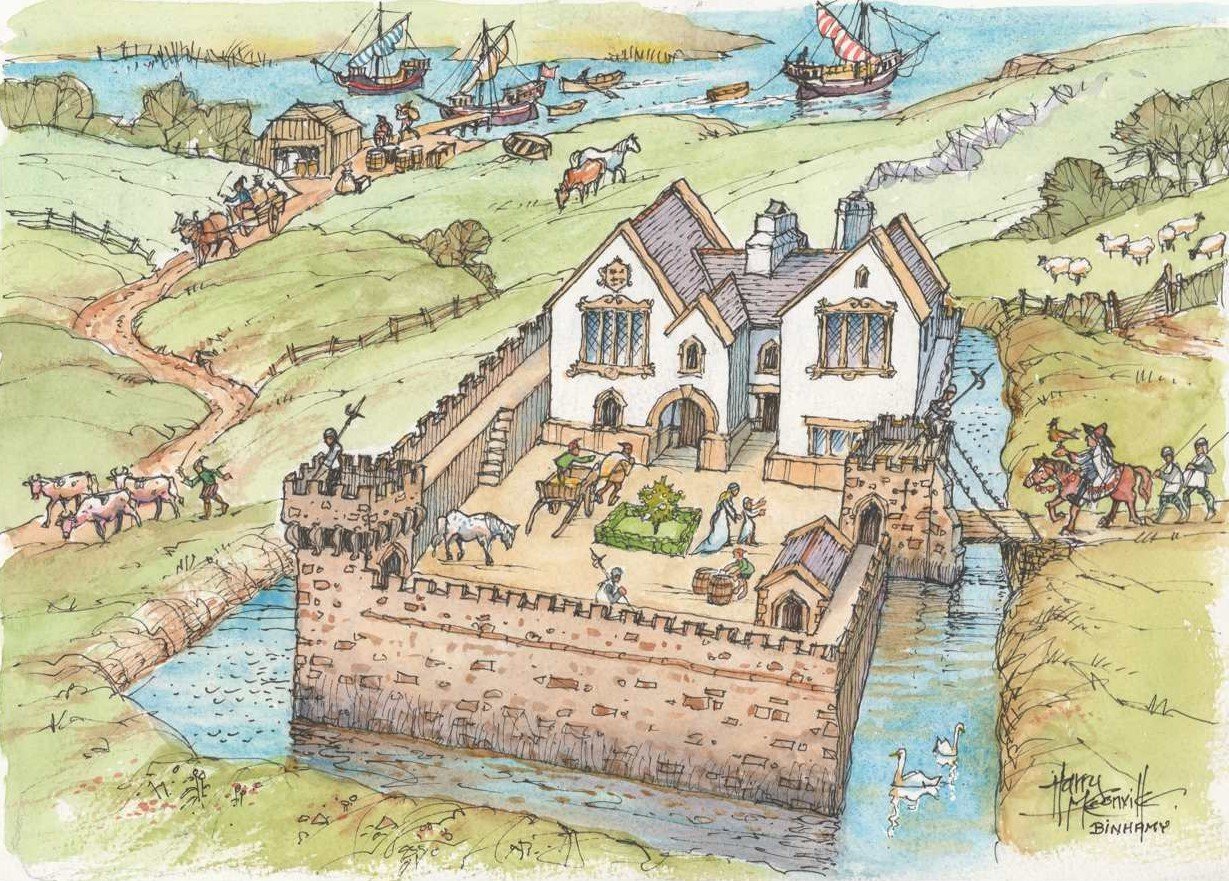
This second Sir Ranulph de Blanchminster married Mirabella de Aspale (Wake) and had at least three girls, no male heirs. Documents around 1306 now identifies him as the owner of the Castle Ennor, Isles of Scilly and nine years later, 1315, he sought the King’s licence to crenellate the castle at Ennor. Despite his endeavours, however, the castle is held in the name of the newly created Duchy of Cornwall by 1337. It is possible that Sir Ranulph had anticipated this as, in 1335, he had sought permission from Edward 111 to crenellate his manor at Binhamy.
The artwork shows an impression, created for the author, of what the moated manor house may have looked like following the 1335 work. Beyond is the river Neet estuary which, at that time, was capable of accommodating coastal shipping
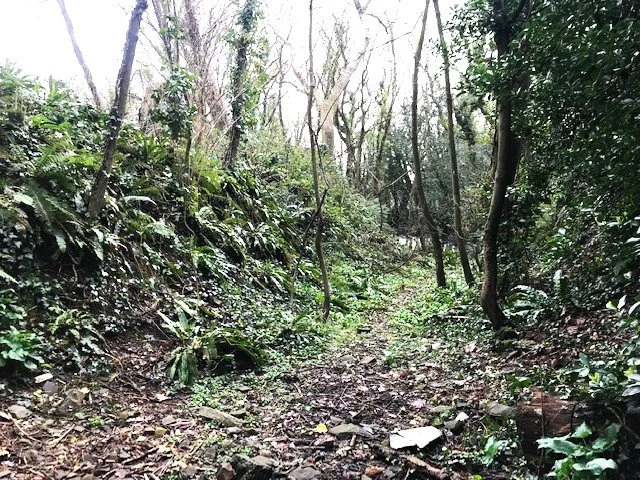
This picture shows the moat today, rather overgrown and neglected. Hopefully, plans are now afoot to have it cleaned up.
On a positive note, the moat is significant in its state of preservation and can be tidied, drained and preserved.
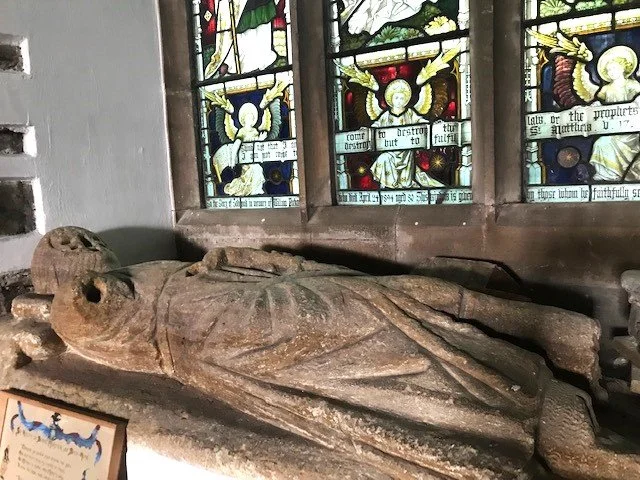
Towards the end of his life, Sir Ranulph engages Richard Bode, the then vicar of St Andrew’s Church at Stratton, as executor of his will in which he leaves a fund to maintain the fabric of the church; to provide armour for the local militia and alms for the poor of the community. It is this set of bequests that forms the basis, or the basic philosophy behind, what in the late 18th century became known as the Blanchminster Trust.
The picture shows the effigy of Sir Ranulph as it lies in the church at Stratton today.
Note: The Story of Stratton Church" by Frederick James Bone, (1919) William Brendan & Sons:
Plymouth. This book is held in the Cornwall library at Bude